
Our Journey Towards Justice
Discover the history and evolution of MDDR since 1981, highlighting our mission and key milestones.
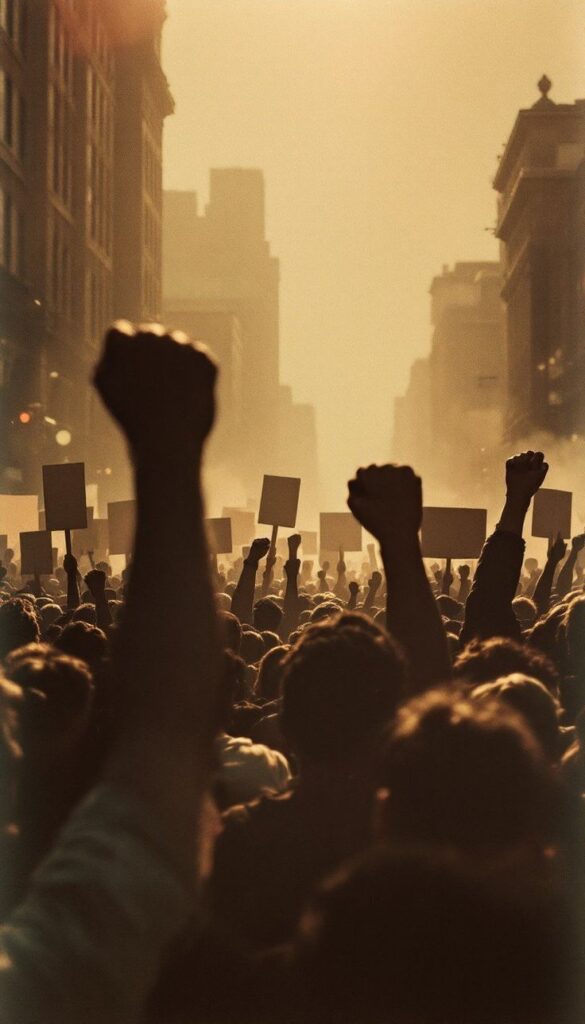
In 1980, nationwide agitations erupted across Sri Lanka demanding wage increases to keep pace with the rising cost of living. In response, the government unlawfully suppressed these movements, leading to the collapse of trade union protections and causing a vast number of public sector workers to lose their livelihoods. Declaring all public services as essential further crippled organized labor activities.
In this challenging environment, a dedicated group of social activists—including Kumar Rupasinghe, S. P. Premawardena, Charles Abeysekera, S. Sivagurunathan, Vimal Fernando, Rofi Siriwardena, and J. Jayasundara—united to establish the Movement for the Defense of Democratic Rights (MDDR). During its first two years, all foundational expenses were personally funded by these founding members to safeguard civic and democratic rights.
In its early stages, MDDR advocated through publications, public gatherings, labor struggles, and peaceful demonstrations. Reports on local human rights violations were regularly shared with international partners in Germany, securing initial operational funding. Later, a visit by Mr. Bertie Cooray from the Netherlands marked a major turning point by securing stable financial support, enabling MDDR to evolve into a fully structured, organized institution by 1988–1989.

Key Historical Milestones & Interventions
Over the decades, MDDR has consistently stood at the forefront of human rights defense, offering legal assistance, advocacy, and community support:
1985 (Water Tax Legal Defense): Initiated legal proceedings and provided free pro bono representation for farmers across Sri Lanka fighting unfair water taxation.
1985 (Asbestos Factory Opposition): Supported affected farmers protesting against the construction of an asbestos factory in Embilipitiya, providing free legal aid and direct intervention when farmer leaders were arrested.
1989–1990 (Legal Redress During Insurgency): Actively advocated for the rights of missing students and their families during the conflict in Embilipitiya, pursuing direct legal action to hold perpetrators accountable in court.
1995 (Pelwatte Sugar Factory Agitation): Partnered with
local farming communities to launch protests opposing
the construction of the Pelwatte sugar factory.
Human Rights Education & Translation Initiatives
MDDR has long recognized that human rights defense begins with education and public awareness:
Pioneering Education
While the United Nations launched its official Human Rights Education Program in 1995, MDDR had already established grassroots human rights educational initiatives two years prior.
Trilingual Accessibility
MDDR translated the UN Universal Declaration of Human Rights into clear, accessible Sinhala. Today, the organization publishes and distributes the Declaration in Sinhala, Tamil, and English.
Regional Footprint & Long-Term Vision
To ensure widespread protection and community empowerment, MDDR has expanded its presence across Sri Lanka, operating in Galle, Kurunegala, Polonnaruwa, Nuwara Eliya, Colombo, Anuradhapura, Ratnapura, Monaragala, and Kalutara.
Through these regional bases, the organization:
Intervenes Directly: Responds promptly to rights violations by offering legal representation and courtroom advocacy.
Empowers Local Advocates: Conducts comprehensive Human Rights Defender training programs and workshops.
Builds Sustainable Networks: Works toward its long-term vision of establishing active, district-level Human Rights Defenders’ Collectives to safeguard community rights nationwide.